Recent global events are creating new cybersecurity risks for organisations in the UK. The UK’s National Cyber Security Centre (NCSC) has issued a warning advising businesses to review their cybersecurity posture amid escalating tensions in the Middle East.
While companies operating in or with links to the region may face higher risks, the NCSC warns that UK organisations of all sizes could experience collateral cyber threats, particularly from Iran-linked hacktivist groups.
For many small and medium-sized businesses, the biggest vulnerability isn’t technology — it’s human error. This makes staff awareness one of the most effective ways to strengthen cyber resilience.
Why This Matters for UK Businesses
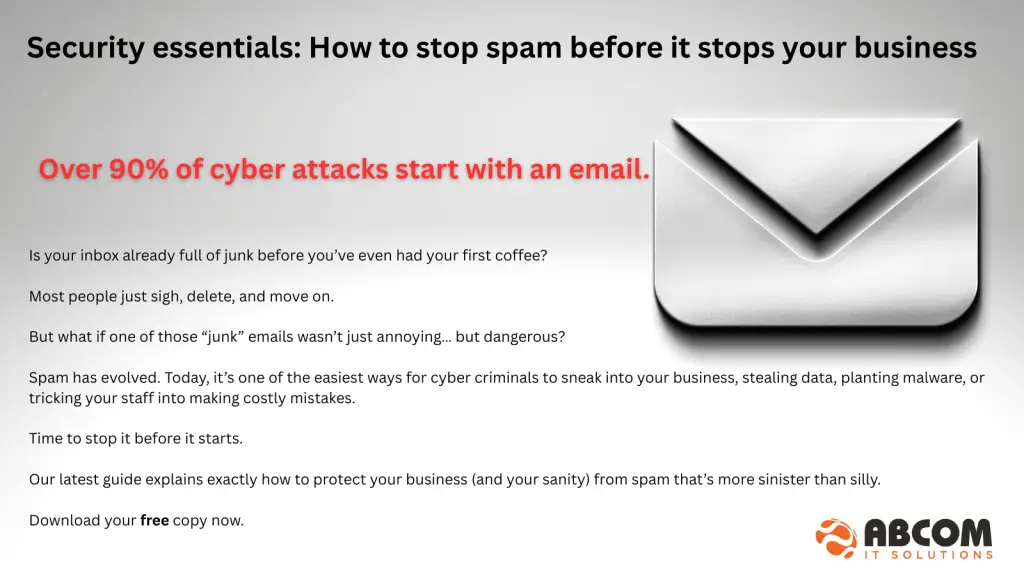
Cyber incidents linked to geopolitical events often target organisations through common attack methods such as phishing emails, distributed denial-of-service (DDoS) attacks, and credential theft.
Hacktivist groups frequently focus on disruption and reputational damage, making even smaller organisations targets.
Many SMEs assume that cybercriminals focus only on large corporations, but attackers often target smaller organisations because they typically have less mature security practices.
| Threat Type | What It Is | How It Impacts Businesses | What Staff Should Do |
|---|---|---|---|
| Phishing | Fraudulent emails designed to steal login credentials or financial information | Data theft, system disruption, and ransomware attacks | Verify suspicious emails and report them immediately |
| DDoS Attacks | Overwhelming a website or system with traffic to force it offline | Website downtime, lost sales, reputational damage | Ensure incidents are reported quickly to IT teams |
| Malware | Malicious software that infects devices | Data theft, system disruption, ransomware attacks | Avoid downloading unknown attachments or links |
| Social Engineering | Manipulating staff into revealing sensitive information | Fraud, credential theft, business email compromise | Account compromise, data breaches, and financial loss |
Employees Are the First Line of Cyber Defence
Technology alone cannot stop cyber attacks. Employees interact with emails, systems, and data every day, making them a critical layer of defence.
When staff understand how to recognise suspicious activity, organisations can detect and stop attacks before serious damage occurs.
Security awareness training empowers employees to:
- Recognise phishing emails and scams
- Identify suspicious activity or unusual system behaviour
- Protect sensitive business data
- Report cyber incidents quickly and confidently
Security Awareness Training for Small Businesses
Security Awareness Training designed for SMEs provides practical, easy-to-understand guidance for employees with little or no technical knowledge.
The training is delivered in short, focused modules and uses real-world examples relevant to everyday business operations.
Key benefits include:
- Improved cyber security awareness across the organisation
- Reduced risk of phishing and social engineering attacks
- Increased staff confidence in identifying and reporting threats
- Stronger alignment with guidance from the UK’s National Cyber Security Centre
Why Now Is the Right Time to Act
With global cyber threats continuing to evolve, proactive cybersecurity awareness is essential for protecting business operations, customer data, and organisational reputation.
Investing in staff awareness today can significantly reduce the likelihood of costly cyber incidents in the future.
For many organisations, fully funded Security Awareness Training is currently available, making it an ideal opportunity to strengthen cyber resilience without additional budget pressures.
Strengthening Your Business’s Cyber Defences
Cybersecurity is no longer just an IT issue — it is a business-wide responsibility. By ensuring staff understand common threats and how to respond, organisations can dramatically improve their overall security posture.
Now is the time to review your organisation’s cyber awareness and ensure your employees are equipped to recognise and respond to emerging threats.
Contact us for more information
Do not just read it. Act on it.
Reading is the easy part. Book a free IT review and we will tell you, in plain English, where your business stands and what to fix first.